
PRACTICAL, PATIENT CENTRED TUBE FEEDING SUPPORT
Enteral Nutrition / Tube Feeding
Whatever led you here, you don't have to work out formula, equipment and daily routines on your own.

Enteral feeding, sometimes called tube feeding, becomes part of daily life for all kinds of reasons...
a swallowing disorder,
a neurological condition,
a gastrointestinal condition
an ear nose and throat disorder,
a traumatic injury,
a congenital condition,
a cancer diagnosis or treatment
for most the reason has made oral eating unsafe or insufficient.
Whilst cancer treatment is one path that leads here, it's far from the only one, and the practical questions that come with a new tube are much the same whatever brought you to this point:
What formula suits you?
How much?
How often?
How to I feed myself?
How to fit feeding around a life you're still trying to live normally?
HOW CAN WE HELP MAKE FEEDING EASIER
What support looks like
Getting a feeding tube is a big adjustment.
That's where ongoing dietetic support comes in — working out which formula actually agrees with you, adjusting rates and volumes as your needs change, troubleshooting things like reflux or blocked lines or a pump, and helping you understand the equipment.
For some people, tube feeding is temporary, and part of this support is working towards a safe return to eating by mouth.
For others, it's a longer-term or permanent part of life, and the goal shifts towards making it feel as manageable and unremarkable as possible, so it fits into your life rather than taking it over.
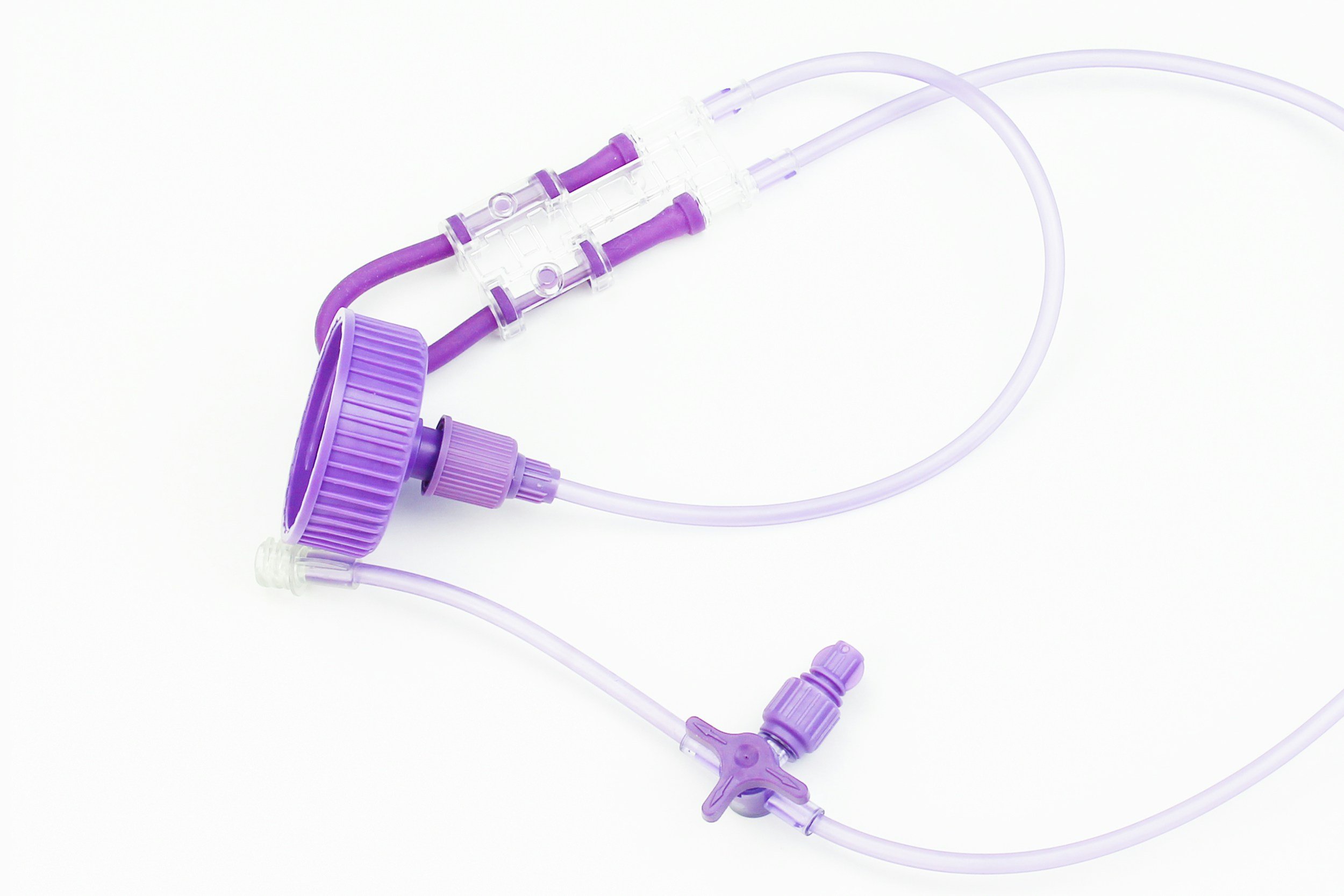
We start where you are, not where you ‘should’ be.
Your first appointment is as much about listening as it is about numbers... what's changed for you, what a normal day looks like now, what's worrying you most. From there we build a feeding plan around your actual life, not the other way around.
The early weeks are usually the hardest, and we stay close through them.
Formula that seemed fine in hospital doesn't always sit well at home, rates need adjusting, routines need testing against real life... work, sleep, family, treatments. We check in often here, because this is where most of the troubleshooting happens, and you shouldn't have to wait weeks for an answer to something that's bothering you today.
As things settle, care becomes less about problem-solving and more about living well.
That might mean fine-tuning nutrition for energy and strength, working towards eating by mouth again where that's possible, or simply making sure feeding fits quietly around life like travel, celebrations, and the things that make life feel normal again.
And for the people supporting someone else through this — a partner, a carer, an adult child — care includes you too. Understanding what's happening and why makes an enormous difference to how confident and calm the whole household feels about it.